

Quick Answer
New hires can disengage when the job they encounter does not match what they expected, priorities are unclear, or support disappears after orientation. Better onboarding gives people clear expectations, practice with feedback, and someone they can turn to as they learn. Review that experience alongside pay, workload, management and the hiring process before deciding why people leave.
Why Do New Hires Disengage?
You spend weeks finding someone, make the offer, and welcome them to the team. A few weeks later, they are looking elsewhere. When it happens again, it is tempting to start rewriting interview questions. Look at what happened after the offer, too.
Did they know what a good first week looked like? Was anyone available to answer questions? Did the schedule, responsibilities and working environment match what you described? Those are things you can investigate before treating another departure as a hiring mistake.
The SHRM Foundation’s Onboarding New Employees: Maximizing Success identifies understanding the role, building working relationships and learning the culture as important parts of a new employee’s adjustment. A welcome email and a completed training checklist do not tell you whether those things happened.

Orientation Gets Someone Started. Onboarding Helps Them Do the Job.
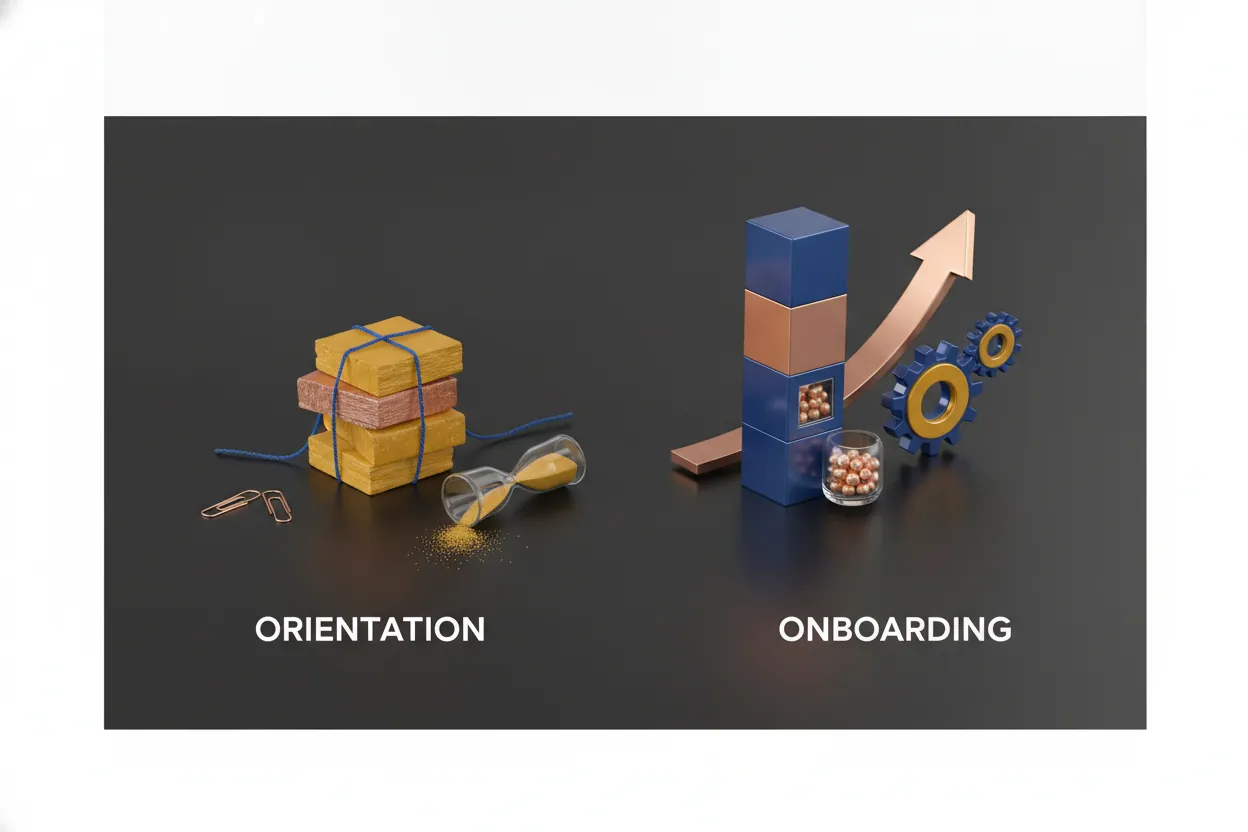
Orientation covers the introduction: access, paperwork, policies and where things are. Onboarding continues into the work itself. It connects what someone was told during hiring with what they are expected to do each day.
| Area | Getting started | Learning the job |
|---|---|---|
| Expectations | A job description and an introduction to the role. | Specific priorities, examples of good work and an explanation of how success is assessed. |
| Training | An overview of tools and procedures. | Demonstration, supported practice and feedback on real work. |
| Connection | Introductions to the team. | A clear person to ask for help and time to build working relationships. |
| Follow-through | A completed welcome checklist. | A manager checking what is clear, what is difficult and what support is still needed. |
A successful onboarding experience helps a new team member understand what to do and why it matters. Understanding the reasoning behind the work gives them a foundation for solving problems when things do not go according to plan.
When we help clients with onboarding, one benchmark we use is “see one, do one, teach one.” Watch it being done, practice it, then teach it back, including the why behind each step. If someone cannot teach it back clearly, we know there is more explaining or practice to do. Completing the checklist is not the same as understanding the work.
Build a Practical Onboarding Plan
Start with the first 90 days as a planning window, then adapt it to the role. It is a useful way to schedule support, not a deadline for knowing everything. Gallup’s onboarding guidance emphasizes that the time needed varies by role and industry.
Before the First Day: Remove the Guesswork
Confirm when and where to arrive, who will meet them and what the first day involves. Prepare the tools and access they need. Assign a manager to own the plan and tell the team what the new person will be responsible for.
First Week: Make Expectations Visible
Explain the first priorities and show examples of good work. Introduce the people they will depend on. Walk through the procedures they will use most, then let them practice with someone available to help. Put the next check-in on the calendar.
First Month: Coach Through Real Work
Give them meaningful work with support appropriate to their experience. Review it together. Ask where instructions conflict or information is missing. A colleague can help with everyday questions; the manager still owns priorities, feedback and decisions.
Days 30–90: Review and Adjust
Use check-ins around 30, 60 and 90 days to review progress and the experience of doing the job. Agree on what they can handle independently, where they need more practice and what the manager will change. Continue support beyond that window when the role calls for it.
The plan needs time assigned to it. If the manager is fully booked and the trainer is covering two jobs, writing a better document will not create the support you promised.
Connect Training to How Your Business Actually Works
Onboarding exposes gaps that experienced people have learned to work around. A new hire may be the first person to ask why the written procedure says one thing while the manager rewards another.
Consider a new front-desk team member in a service business. They have watched someone handle a client concern, but they have not been told which decisions they can make, when to involve a manager, or how the business judges a good resolution. More shadowing alone may leave those questions unanswered.
Give them the procedure, explain the policy boundaries, practice a realistic situation, and review the result together. The standard should agree with the measure: if you care about the client’s experience, do not teach someone that ending the conversation quickly is the whole goal. This is where SOPs, KPIs and policies need to work together.
Reviewing how responsibilities, training and day-to-day operations connect is part of our business growth consulting.
How to Tell Whether Onboarding Is Working
Ask questions that tell you more than “How is everything going?” In a check-in, try:
- What are your main priorities right now, and how will you know you have done them well?
- Which parts of the work can you handle confidently, and where are you still guessing?
- Who do you go to when you need help? Have you been able to get it?
- What has been different from what you expected when you accepted the role?
- What should we change before the next person starts?
Compare their answers with observed work and the support that was actually provided. Track early departures by start date, role and manager, along with the reasons people give for leaving. In a small team, keep the counts visible: one departure can change a percentage dramatically.
Start with your most recent hire. Find one unclear expectation, missing handoff or unanswered question and assign someone to fix it. Then use what you learn to improve the next person’s experience.

